Web Development
1. what is Web Development?

Web Development is the process of building and maintaining websites and web applications that run on the internet. It involves creating everything from simple static webpages to complex dynamic platforms like e-commerce sites, social networks, and interactive applications. Web development is typically divided into three main areas: Front-End Development, Back-End Development, and Full-Stack Development. Developers use various programming languages, frameworks, and tools to create seamless user experiences and ensure websites function properly across different devices and browsers.
Front-End Development focuses on the user interface (UI) and the visual aspects of a website—the part users directly interact with. It involves using languages like HTML (for structure), CSS (for styling), and JavaScript (for interactivity). Front-end developers work to ensure websites are responsive (adapt to different screen sizes) and provide an engaging experience. They may also use frameworks and libraries like React, Angular, and Vue.js to speed up development and improve performance.
Back-End Development involves managing the server, database, and application logic—the part of a website users do not see. It handles tasks like data storage, user authentication, and business logic. Common back-end languages include Python, Java, Node.js, PHP, and Ruby. Developers often use frameworks like Django, Spring Boot, and Express.js for faster and more secure coding. Back-end developers also work with databases (e.g., MySQL, PostgreSQL, and MongoDB) to store and retrieve information efficiently.
2.Frontend Frameworks (React, Angular, Vue)
Frontend Frameworks (React, Angular, Vue)
are essential tools for building modern web applications. These frameworks provide pre-written code structures, making development faster and more efficient. They help developers create responsive, interactive, and scalable web pages by offering reusable components, data binding, and efficient state management. Each framework has its own design philosophy and is suited for different types of projects, from simple web pages to large-scale enterprise applications. Understanding their differences helps developers choose the right tool for their needs.
React is a highly popular JavaScript library created by Facebook (now Meta) for building user interfaces (UIs). It is known for its component-based architecture and uses a Virtual DOM to optimize page rendering, leading to better performance. React is highly flexible and can be integrated with other libraries and frameworks. It is best suited for single-page applications (SPA) and dynamic interfaces. Its popularity in the industry is reflected in major platforms like Instagram, Netflix, and WhatsApp, which rely on React to deliver smooth and fast user experiences.
Angular, developed by Google, is a TypeScript-based framework that provides a comprehensive environment for building scalable web applications. Unlike React, which focuses only on the view layer, Angular is a full-fledged framework offering two-way data binding, dependency injection, and modular architecture. It is ideal for large and complex applications requiring a structured development approach. Many enterprise-level applications, such as Gmail and Microsoft Office Online, use Angular due to its ability to manage complex workflows, enhance security, and support cross-platform development.
.webp)
3. Backend Technologies (Node.js, Django, Flask)
Backend Technologies (Node.js, Django, Flask)
are used to build the server-side of web applications, which manage databases, handle user authentication, and process business logic. These technologies form the backbone of web systems, allowing data to flow between the frontend and databases. Each framework or runtime has unique strengths tailored to different project requirements. Choosing the right backend technology depends on factors such as scalability, performance, and ease of development.
Node.js is a JavaScript runtime built on Chrome’s V8 engine, allowing developers to use JavaScript for both frontend and backend development. It is popular for building asynchronous, event-driven applications that require real-time capabilities, like chat applications and live-streaming services. Node.js is highly efficient due to its non-blocking I/O model, which handles multiple requests simultaneously without waiting for previous tasks to complete. It powers major platforms like LinkedIn, Netflix, and PayPal due to its speed and ability to scale under heavy traffic.
Django is a high-level Python web framework known for its security, scalability, and rapid development capabilities. It follows the Model-View-Template (MVT) architectural pattern and includes built-in features such as authentication, admin panels, and database management. Django is ideal for large-scale applications where security and efficiency are critical, such as content management systems (CMS), e-commerce platforms, and financial applications. Popular websites like Instagram and Spotify use Django for its robust and modular approach to web development.
Flask is a lightweight and flexible Python web framework, ideal for building small to medium-sized applications. Unlike Django, Flask follows a micro-framework approach, providing only the core features while allowing developers to add custom components. This makes it perfect for REST APIs, prototyping, and simple web applications. Flask is used by companies like Pinterest and Lyft due to its minimalist design, fast performance, and customizability, giving developers full control over how their applications are structured.
.webp)
4.API Development
API Development Development refers to the process of designing, building, and maintaining interfaces that allow software applications to communicate with each other. APIs act as bridges between different software systems, enabling seamless data exchange and functionality sharing. They are essential in modern software architecture, allowing developers to integrate third-party services, enhance modularity, and support cross-platform operations. APIs can be categorized into various types, including RESTful APIs, GraphQL, SOAP, and gRPC, each catering to specific development needs.
RESTful APIs are the most common type of web APIs, following the REST (Representational State Transfer) architectural style. They use standard HTTP methods (GET, POST, PUT, DELETE) to perform operations on resources and return data in formats like JSON or XML. REST APIs are stateless, meaning each request is independent, ensuring scalability and simplicity. Major platforms like Twitter, Google Maps, and Stripe use REST APIs for public-facing and internal services. REST is preferred for its flexibility, ease of implementation, and support for caching and load balancing.
GraphQL, developed by Facebook, is a modern API query language that allows clients to request exactly the data they need, reducing over-fetching and under-fetching. Unlike REST, where each endpoint is predefined, GraphQL provides a single endpoint that dynamically resolves queries. This flexibility makes it ideal for applications with complex data relationships like social networks and e-commerce platforms. GraphQL enhances performance by minimizing data transfer and supports real-time updates using subscriptions, making it suitable for dynamic and data-driven applications.

5.Web Performance Optimization
Web Performance Optimization
refers to the techniques and strategies used to improve the speed, efficiency, and user experience of a website. Faster websites enhance user satisfaction, reduce bounce rates, and improve search engine rankings. With the rise of mobile browsing and global access to the internet, optimizing web performance is essential for ensuring accessibility and delivering a seamless experience across devices. The goal is to minimize load times while maintaining functionality and visual quality.
One of the primary techniques in WPO is reducing page load time by optimizing HTML, CSS, and JavaScript. This can be achieved by minifying code (removing unnecessary characters and spaces), compressing assets using Gzip or Brotli, and employing lazy loading to defer loading of non-critical resources. Efficient caching also improves performance by storing copies of static files on the user's device or intermediary servers. Implementing a Content Delivery Network (CDN) helps serve content from locations closer to the user, reducing latency and improving page speed.
Image optimization is another crucial aspect of WPO. Large images can slow down web pages, so compressing images using tools like ImageOptim or TinyPNG reduces their file size without sacrificing quality. Modern image formats like WebP or AVIF offer better compression than traditional JPEG or PNG. Responsive images, which adapt to different screen sizes and resolutions, ensure an optimal user experience across devices. Additionally, preloading critical resources and asynchronous loading of scripts prevents blocking page rendering, leading to a smoother browsing experience.
6.Progressive Web Apps (PWAs)
Progressive Web Apps (PWAs)
are advanced web applications that offer a native app-like experience while being delivered through standard web technologies such as HTML, CSS, and JavaScript. They combine the best features of web and mobile apps, including offline access, push notifications, and fast performance. PWAs are designed to be responsive, secure, and installable, meaning users can add them to their device's home screen without using an app store. They work seamlessly across different devices and operating systems, providing a unified experience.
A key feature of PWAs is offline functionality, which is made possible by service workers. Service workers act as a proxy between the web browser and the network, allowing caching of important resources. This ensures that users can continue to interact with the app even without an active internet connection. Additionally, PWAs can send push notifications, enhancing user engagement by providing timely updates. Features like background sync allow the app to update data when the device reconnects to the internet, ensuring a smooth user experience without manual intervention.
PWAs also provide performance improvements by loading content faster through advanced caching techniques and minimizing data usage. Since they are accessed via a web browser, there is no need for complex installation processes or constant updates through app stores. Companies like Twitter, Starbucks, and Flipkart have successfully adopted PWAs, resulting in faster load times, higher user retention, and improved conversion rates. By following progressive enhancement principles, PWAs work on all modern browsers while offering advanced capabilities on supported platforms. This makes them a versatile and cost-effective solution for delivering rich web experiences.
.webp)
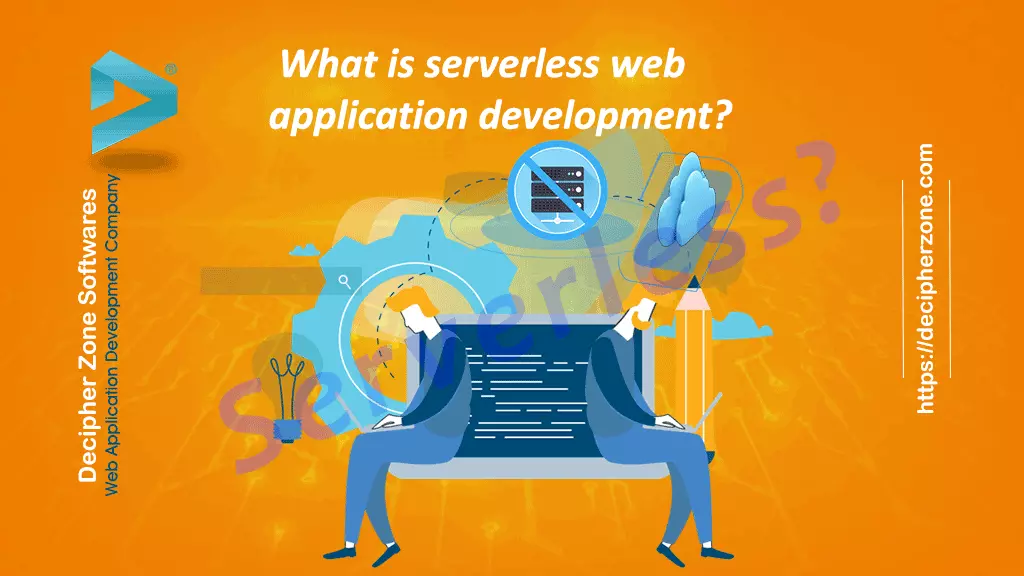
7. Serverless Web Development
Serverless Web Development
is a modern architecture where developers focus on writing code without managing or maintaining servers. Instead of deploying applications on traditional servers, the cloud provider automatically handles the infrastructure, scaling, and resource management. This model is called "serverless" because servers are abstracted from the developer's perspective. Popular serverless platforms include AWS Lambda, Google Cloud Functions, Azure Functions, and Netlify Functions.
One of the main advantages of serverless web development is scalability. Applications automatically scale up or down based on user demand. For instance, if a website suddenly experiences a spike in traffic, the cloud provider adjusts resources accordingly without any manual intervention. This ensures that applications remain responsive and available under heavy load. Additionally, developers only pay for the computing time they use, which makes serverless solutions cost-effective for both small-scale and large-scale applications.
Serverless architecture also simplifies the development process. It allows developers to focus on building and deploying application features without worrying about infrastructure. This model is particularly useful for building APIs, data processing tasks, and event-driven applications. For example, an e-commerce website can use serverless functions to handle payment processing, image uploads, and user authentication. Serverless web development promotes faster time-to-market, reduces operational overhead, and allows businesses to deliver highly responsive, scalable web applications efficiently.
8. WebAssembly
WebAssemblyis a low-level binary format that allows code written in multiple programming languages (like C, C++, and Rust) to run efficiently on web browsers. Unlike JavaScript, which traditionally powers web applications, WebAssembly provides near-native performance by compiling code into a fast, portable binary format. It is designed to work alongside JavaScript, enabling faster execution and better resource management for complex applications. Major browsers like Chrome, Firefox, Edge, and Safari support WebAssembly, making it a powerful tool for modern web development.
One of the most significant benefits of WebAssembly is its ability to deliver high-performance applications on the web. This is especially useful for applications requiring intensive computing, such as 3D graphics, video editing, gaming, and scientific simulations. For example, developers can port a desktop game written in C++ to the web using WebAssembly without losing performance. It also allows code reusability, where existing software can be reused on web platforms without rewriting it entirely in JavaScript.
WebAssembly enhances security and scalability. It runs inside a secure sandbox environment, ensuring the execution of untrusted code without compromising the user's system. This feature is beneficial for applications requiring advanced computations, such as cryptography and machine learning. As WebAssembly continues to evolve, it is expanding beyond the web, supporting server-side applications and edge computing, making it a versatile solution for both client and server environments. Its efficiency, portability, and compatibility position WebAssembly as a future-proof technology for next-generation web applications.

Comments